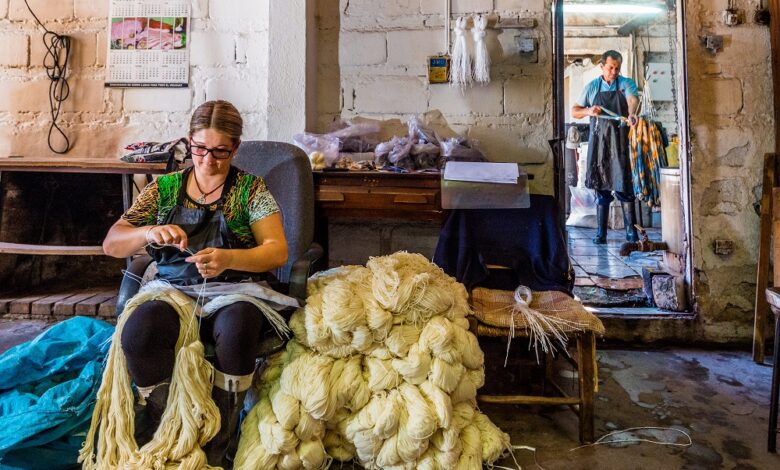
The global apparel market produces billions of garments annually, dominated by mechanical automation, synthetic textiles, and hyper-accelerated supply chains. This industrial model prioritizes speed, volume, and cost-efficiency above all else. While this system has democratized access to trendy clothing, it has created a profound cultural casualty: the rapid erosion of traditional artisan crafts.
For centuries, textile production was fundamentally localized, slow, and deeply intertwined with regional identity. Techniques such as hand-weaving, natural block printing, intricate hand-embroidery, and traditional lacemaking were passed down through generations. Today, these heritage crafts face an existential crisis. As industrial factories clone complex patterns using digital printers and computerized looms, the living history preserved within handmade textiles is being erased.
The Mechanization of Heritage and the Illusion of Luxury
The core threat to artisan preservation stems from the industrial fashion complex’s ability to mimic handcraft at a fraction of the time and cost. What once required weeks of meticulous human labor can now be replicated by a machine in seconds.
Digital Duplication vs. Tangible Soul
Modern textile printing technology can scan hand-painted batik, intricate ikat weaves, or delicate lace and print them directly onto cheap polyester fabric. To the untrained eye of a casual consumer, the visual pattern looks similar. However, this optimization strips the design of its structural depth and cultural value. A printed pattern lacks the texture, the intentional imperfections, and the structural integrity of a genuine hand-woven or hand-dyed textile. This superficial replication devalues the original craft, tricking consumers into accepting cheap simulations while the authentic practices fade into obsolescence.
The Dilution of Luxury Branding
Historically, luxury fashion houses anchored their prestige in the mastery of human hands. Haute couture relied on independent European ateliers and specialized regional clusters globally for unique embellishments. However, as major luxury conglomerates scaled up to maximize profits, many shifted toward mechanized production methods. The term luxury is increasingly applied to items manufactured on automated assembly lines, with handmade details reduced to mere marketing gimmicks. This shift leaves independent artisans without the corporate patronage that historically kept their lineages financially viable.
Economic Marginalization and the Generational Disconnect
Artisan craft cannot survive on sentimentality alone; it requires an economic foundation that allows practitioners to earn a sustainable living. The pricing structures of industrial fashion have warped consumer expectations, making genuine handcraft financially unsustainable for creators.
The Wage Gap in Traditional Craft
Because industrial fashion produces low-cost garments, the global consumer has grown accustomed to unnaturally deflated prices. When an artisan spends forty hours hand-weaving a single silk scarf, the fair price of that item must reflect those hours of skilled labor. However, in a market saturated with cheap alternatives, artisans struggle to find buyers willing to pay a fair wage. Consequently, master craftspeople often live in economic precarity, earning far less than factory workers despite possessing a lifetime of specialized knowledge.
The Loss of Generational Succession
The direct result of this economic hardship is a massive generational disconnect. Younger generations living in traditional craft communities observe the financial struggles of their parents and elders. Eager to escape poverty, they understandably abandon ancestral workshops in favor of urban migration, technology sectors, or entry-level factory work. When a master artisan passes away without an apprentice to inherit their specific knowledge, centuries of technical expertise, oral history, and material science disappear instantly.
The Environmental and Cultural Loss of Local Knowledge
The loss of artisan craft is not merely a loss of aesthetic diversity; it represents the destruction of localized ecological wisdom. Traditional textile production is inherently sustainable, relying on a deep understanding of regional natural resources.
Material Science and Natural Alchemy
Before the invention of synthetic petrochemical dyes, artisans were master chemists of the natural world. They formulated vibrant palettes using roots, leaves, insects, and mineral muds. For example, the creation of true natural indigo requires a complex fermentation process that takes days to perfect. Similarly, traditional weavers understand how local weather patterns, humidity, and water purity affect raw fibers like linen, silk, and wool. Industrial fashion replaces this non-toxic, localized knowledge with heavy chemical processors, contributing to massive water pollution and environmental degradation.
Cultural Identity and Stolen Narratives
Textile crafts are rarely purely decorative; they function as unwritten historical records. The geometric patterns in Andean weavings, the specific motifs of Indian block prints, and the symbols stitched into West African cloths often convey stories of lineage, spirituality, social status, and historical events. When industrial brands appropriate these motifs without permission, context, or compensation, they strip the designs of their sacred meaning. This intellectual piracy reduces a living cultural identity to a transient seasonal trend, completely severing the connection between the craft and its rightful community.
Models for Sustainable Intervention and Revitalization
Reversing the artisan crisis requires moving away from charity-based models toward structural integration within the modern fashion economy. If artisan craft is to survive, it must be recognized as a premium, non-industrial luxury tier.
Transparent Supply Chains and Direct Patrons
The most effective path forward involves establishing decentralized supply chains that connect global designers directly with artisan collectives. By eliminating predatory middlemen, artisans can retain a significantly higher percentage of the retail price. Forward-thinking brands are shifting toward a co-design model, where the artisan is credited as a creative partner rather than a hidden laborer. This elevation of status attracts consumer interest and restores a sense of pride and prestige to the profession.
Geographic Indications and Legal Protections
To combat industrial counterfeiting, the global community must utilize legal frameworks similar to those used in the wine and food industries. Geographic Indication status ensures that names like Harris Tweed, Murano glass, or specific regional embroideries are legally protected. If an industrial brand creates a machine-made replica, they are legally barred from using the traditional name. This legal distinction helps consumers identify authentic products and justifies the higher financial investment required to support genuine human craftsmanship.
Frequently Asked Questions
What exactly distinguishes an artisan craft from a standard handmade garment?
An artisan craft involves specialized heritage techniques that require deep cultural knowledge, manual dexterity, and a high degree of creative mastery passed down through generations. Standard handmade clothing simply refers to assembly that is not fully automated, such as a factory worker operating a standard industrial sewing machine to stitch together pre-cut fabric panels. Artisan craft requires the artisan to make creative, real-time decisions regarding tension, dye mixing, or pattern execution, making each piece entirely unique.
Why cannot modern automation perfectly replicate the quality of hand-woven textiles?
Automated looms operate at incredibly high speeds and under uniform, intense tension to maximize output. This mechanical stress requires fibers to be coated in synthetic sizing agents to prevent breakage, resulting in a stiff, uniform fabric. Hand-weaving allows the artisan to adjust the tension dynamically based on the natural variations of the yarn. This creates a flexible, breathable, and resilient textile with a distinctive drape and texture that machines cannot duplicate without snapping the delicate, high-quality natural fibers.
Is it ethical for contemporary designers to update traditional artisan patterns for modern markets?
It is ethical only if the process is collaborative, respectful, and mutually beneficial. When a designer works alongside an artisan community, seeks their permission to adapt sacred motifs, and ensures fair financial compensation, innovation can actually help preserve the craft by making it relevant to modern global consumers. However, if a designer copies a traditional pattern independently and manufactures it in a separate factory without involving the source community, it constitutes cultural appropriation and economic exploitation.
How does the loss of traditional textile crafts affect global biodiversity?
Traditional textile crafts rely heavily on localized, heirloom varieties of plants and animals. For instance, specific regional weaving traditions depend on native sheep breeds, specialized silkworm varieties, or specific wild plants used for natural dyes. As these crafts disappear, the economic incentive to raise these rare breeds or cultivate these specific plants vanishes. This leads to agricultural monoculture, where communities switch to mass-market crops or synthetic alternatives, directly accelerating the loss of local biodiversity.
How can a standard consumer verify if a product is genuinely artisan-made?
Authentic artisan products generally feature documentation regarding the specific community, artisan name, and the regional technique utilized. Consumers should look for imperfections in the weave, slight variations in dye shades, or irregular block print alignments, which indicate human production. Additionally, true artisan garments rarely carry low price tags; if a brand claims an item is hand-embroidered or hand-woven but sells it for a price comparable to fast fashion, it is almost certainly a machine-made imitation or produced under highly exploitative labor conditions.
Can the rise of conscious consumerism completely save these dying crafts?
Conscious consumerism is an important catalyst, but it cannot solve the crisis in isolation. Consumer demand must be paired with systemic changes, including government protections, cultural preservation grants, and corporate accountability. Educational programs must also be established within artisan communities to teach business literacy, digital marketing, and intellectual property rights, empowering craftspeople to navigate the global economy independently without relying solely on the erratic trends of Western consumer philanthropy.