Handmade decorations have been an integral part of Christmas traditions for a long time, providing a feeling of warmth and uniqueness that is usually missing in store-bought decorations. They showcase the dedication and craftsmanship of those artisans who spend countless hours to make each detail perfect. Besides, the focus on handcrafting in holiday collections like Christopher Radko ornaments demonstrates how the use of traditional methods keeps shaping contemporary Christmas decorations in significant ways.
A Return to Artisanal Values
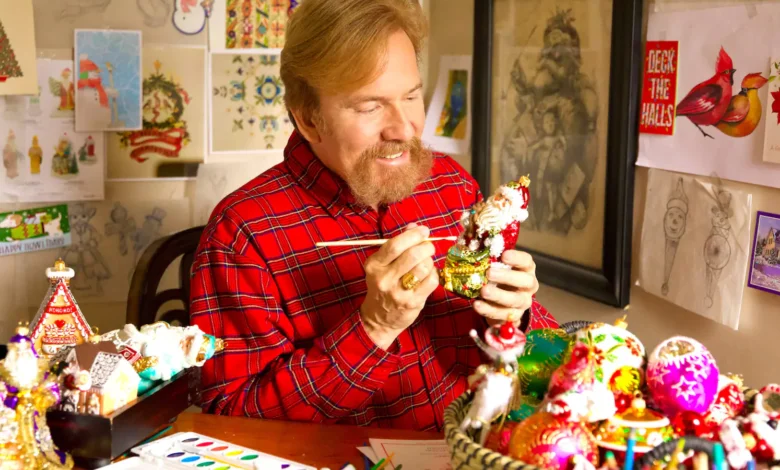
Handmade ornaments today stand for a slower, more deliberate way of creating, which is the opposite of the fast-consuming and factory-producing world we live in. A handcrafted piece is basically a work of art that starts with a creative idea. Artists usually draw the initial concept by hand, and then they decide on materials like glass, wood, ceramic, fabric, or metal. Subsequently, they use traditional methods of working with the materials to make the ornaments, such as shaping, molding, or carving. When it comes to glass ornaments, the craftsmen will hand-blow molten glass into a mold, then it is cooled, silvered, and painted in detail.
Producing in this manner is very different from factory lines that depend on machines and where the main priorities are uniformity and fast production. Above all, items made by hand intrinsically permit variations. These little differences in the way paint, texture, or final polish are done make us aware that there was a person behind the product. With the emergence of the modern consumer who appreciates authenticity, such imperfections turn into traits of character rather than defects.
Preserving Cultural Traditions
Handcraftsmanship in holiday decor is very much intertwined with the cultural roots of a community. In fact, in many parts of the world, the skills and knowledge around the creation of ornaments have been handed down from one generation to another. The techniques that were once limited to glassmaking towns in Europe, native beadwork groups, or the isolated rural carpentry villages still have an impact on the designs that are seen today.
Today, Christmas decorations not only coexist with these practices but also integrate traditional craftsmanship with modern themes and color schemes. Whereas the decorative elements may change to suit present-day preferences, the use of cute characters, sentimental images, or plain styles, the basic methods are always traceable to the past. When people buy handcrafted Christmas tree ornaments, they are unknowingly preserving the local arts and crafts knowledge, which is very likely to disappear due to the rise of mass production.
Emotional and Symbolic Significance
Handmade decorations are also very emotional. Artisan products, in most cases, can be understood as gifts when the pieces are personal, unlike the mass-produced ones, which are bought in bulk. They can be used to celebrate or honor a moment such as a child’s first Christmas, a wedding, or the purchase of a new house. The effort made in their production makes these items real; thus, families are motivated to keep and transfer them through the years.
This emotional aspect is very crucial in the latest holiday decorations. As celebrations visually become more stylized, mostly under the influence of social media aesthetics, there is an increasing need for ornaments that have their own story. A handmade ornament can be the very representation of memories that one has shared with family traditions or ethnic roots. Having it on the Christmas tree or a mantelpiece is an annual ritual that will give people strength every time.
Sustainability and Conscious Consumption
Handmade holiday ornaments are not only great for decorating houses, but they also perfectly resonate with the idea of sustainability. Most of the mass-produced decorations are made of cheap plastics and are meant to be used for a short period only. On the other hand, artisan-crafted ornaments are usually made of high-quality materials and can become family heirlooms.
By trying to keep things for longer, less waste is generated, and consumption becomes more thoughtful. Consumers can get fewer items, but they are likely to be more meaningful and lasting. Besides, small-scale production is generally less harmful to the environment than big industrial operations. The move to quality rather than quantity mirrors a wider shift in consumer behavior, where factors like ethical sourcing and environmental impact are becoming increasingly important in decision-making.
Blending Tradition with Contemporary Style
Today’s holiday decorations still keep the spirit of tradition; they, however, reinterpret it. A traditional element ends up combining with modern-day taste in handicrafts that show perennial skills reinterpreted from a contemporary angle. It is common for painters or embroiderers to maintain the essence of their crafts while simultaneously introducing new color schemes, storylines, and chic materials.
That is why handcrafted ornaments have become so versatile that they can complement various interior designs effortlessly. Besides bringing comfort to machine-made ones, in whatever style, minimalist or flamboyant, they lend the space a different kind of texture and eye-catching appeal. Their multi-finished surfaces and finely crafted details reflect the light in various ways, which results in a three-dimensional and cozy effect of the Christmas setups.
The Enduring Appeal of Craft
Ultimately, the handcrafting of holiday decorations has the central role of connecting people with art, culture, and significance. In today’s hectic life, handcrafted ornaments prompt us to stop and acknowledge the time, effort, and creativity invested in them. They change the act of decorating into telling stories and give a seasonal display as a way of showing oneself.
One of the examples is the Christopher Radko ornaments that show how old-fashioned handiwork still manages to touch the hearts of the people who live in the present; thus, even in a digital age, the human element keeps being at the center of the ways we celebrate and remember holidays.